
Wildlife You Can Only Experience at Jaguar’s Jungle Lodge in Costa Rica
Most visitors to Drake Bay hope to see monkeys, scarlet macaws, and sloths during a tour into Corcovado National Park. But staying at Jaguar’s Jungle Lodge is a completely different experience. Here, the rainforest is not something you visit for a few hours during the day. You live inside it.
Located deep in the remote rainforest of the Osa Peninsula, Jaguar’s Jungle Lodge sits directly within one of the most biologically intense regions on Earth. Unlike hotels in downtown Drake Bay, our lodge is surrounded by primary rainforest, wild coastline, rivers, and protected jungle habitat where rare animals still move freely through the property itself.
Many guests are surprised to discover that some of the most memorable wildlife encounters happen without ever leaving the lodge grounds.
Can I Spot Wildlife From My Room at Jaguar’s Jungle Lodge?
Yes. Wildlife viewing at Jaguar’s Jungle Lodge often begins right outside your cabin.
Because the lodge is located far from roads, towns, and concentrated development, animals regularly pass directly through the property. Guests commonly hear howler monkeys at sunrise, see toucans flying over the trees during breakfast, and encounter nocturnal animals during evening walks between cabins.
Unlike many hotels in Drake Bay that are located near the village or accessible roads, Jaguar’s Jungle Lodge is immersed in untouched rainforest habitat. This allows species that are extremely shy around humans to remain active near the lodge.
Some guests have even spotted tapirs walking across the yard or feeding near the dining area at night.
What Makes Jaguar’s Jungle Lodge Unique in Drake Bay?
Jaguar’s Jungle Lodge offers a style of wildlife immersion that is extremely rare in Costa Rica.
Rather than staying near town and taking day tours into nature, guests stay directly inside the ecosystem itself. The lodge is only accessible by boat and is surrounded by dense jungle and remote coastline bordering protected wilderness.
What makes the experience especially unique is the consistency of wildlife activity directly on the property. Animals here are not confined to distant park trails. They move naturally through the lodge grounds because the rainforest around the property remains intact and undeveloped.
The lodge is also known for offering specialized wilderness experiences that few other lodges in the region provide, including the Corcovado overnight trip to San Pedrillo, remote night walks, wildlife-focused rainforest hikes, and access to deeply isolated sections of the Osa Peninsula.
Baird’s Tapirs at Jaguar’s Jungle Lodge
One of the most extraordinary animals regularly seen at Jaguar’s Jungle Lodge is the Baird’s tapir.
Baird’s tapirs are the largest land mammals in Central America and are considered endangered due to habitat loss across much of their range. Adult tapirs can weigh up to 700 pounds and play a critical role in rainforest ecosystems by dispersing seeds through the forest.
Despite their size, tapirs are usually extremely elusive animals. In many parts of Costa Rica, seeing one in the wild is considered a once-in-a-lifetime experience.
At Jaguar’s Jungle Lodge, however, tapirs are frequent visitors. Several tapir families move through the property regularly, often crossing directly through the yard at night. Guests occasionally watch them wander near the cabins or approach the dining room area in the evening. Over the years, the lodge has become known for these encounters, and videos of the tapirs visiting the property can be seen on the lodge’s Instagram.
Because the surrounding rainforest remains connected and protected, the area supports healthy wildlife movement corridors that allow these animals to continue using the property naturally.
For many visitors, seeing a wild tapir just steps from their room becomes the highlight of their entire Costa Rica trip.
Pumas on the Lodge Property
Pumas, also known as mountain lions or cougars, inhabit the forests surrounding Jaguar’s Jungle Lodge and have been spotted directly on the property.
These powerful wildcats are highly adaptable predators capable of traveling enormous distances through rugged rainforest terrain. Although they are naturally secretive and rarely seek contact with humans, remote camera footage and direct sightings confirm that pumas continue to move through the lodge’s surrounding jungle. The presence of apex predators like pumas is one of the clearest indicators of a healthy rainforest ecosystem. In areas with heavy development or tourism infrastructure, large predators often disappear entirely. Their continued presence around Jaguar’s Jungle Lodge reflects how wild and ecologically intact this region of the Osa Peninsula remains.

Jaguars in the Osa Peninsula
Jaguars are among the rarest and most elusive animals in Costa Rica.
Although sightings are extremely uncommon, jaguars still survive within the protected wilderness of the Osa Peninsula and Corcovado region. These apex predators require vast areas of intact habitat and generally avoid human activity.
One of the most remarkable jaguar sightings connected to Jaguar’s Jungle Lodge occurred during the Corcovado overnight tour near San Pedrillo Station. The animal was spotted deep within the rainforest of the biological reserve during a guided expedition offered through the lodge.
Encounters like this are exceptionally rare and are only possible in regions where large protected ecosystems still exist.
For wildlife enthusiasts, simply knowing that jaguars continue to roam these forests adds a powerful sense of wilderness to the experience of staying on the Osa Peninsula.
Kinkajous on Night Tours
Kinkajous are one of the most fascinating nocturnal animals guests may encounter during night tours at Jaguar’s Jungle Lodge.
Sometimes called “honey bears,” kinkajous are arboreal rainforest mammals related to raccoons. They spend most of their lives high in the canopy and are rarely seen during the day. At night, however, they become active, climbing through the trees using their prehensile tails and searching for fruit and nectar.
Guests on guided night walks occasionally spot kinkajous moving through the branches overhead, their glowing eyes reflecting flashlight beams in the darkness. Their movements are surprisingly agile and quiet, making sightings feel especially magical in the dense rainforest environment.
Ocelots: Rare Nocturnal Wildcats
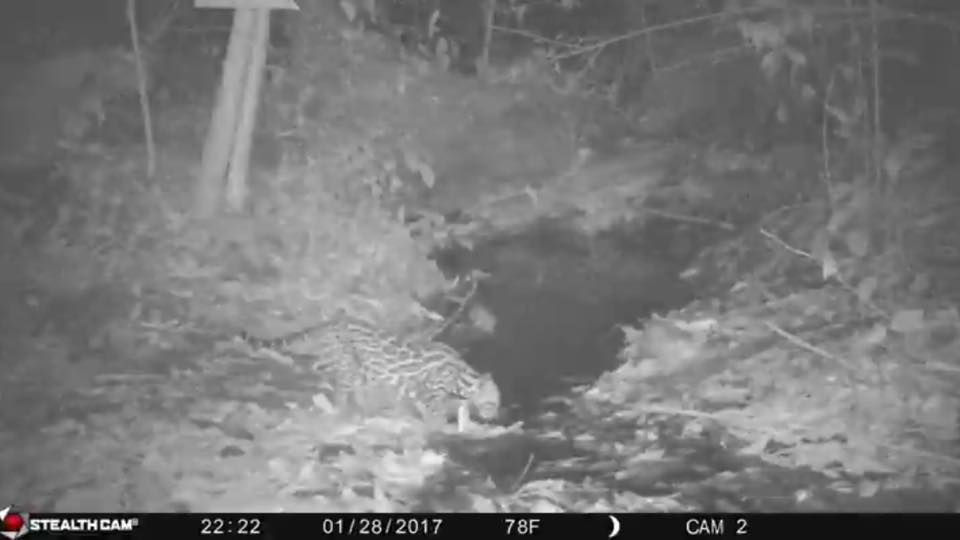
Ocelots are another elusive rainforest predator known to inhabit the area surrounding Jaguar’s Jungle Lodge.
These beautifully patterned nocturnal wildcats are smaller than pumas or jaguars but are highly skilled hunters adapted to dense jungle habitat. Ocelots are primarily active at night and are notoriously difficult to spot in the wild. Sightings on the property are rare but possible, especially during nighttime hours when the forest becomes active with nocturnal wildlife.
Knowing that animals like ocelots still roam freely around the lodge highlights just how wild this region remains compared to more developed tourist destinations in Costa Rica.
What Is the Best Time to Visit the Osa Peninsula for Wildlife Watching?
The Osa Peninsula offers excellent wildlife viewing year-round, but the experience changes with the seasons. At the Jaguar's Jungle Lodge, the answers to these questions are not like other generic answers you will find all over the internet.
Dry Season
The dry season, generally from December through April, offers sunnier weather and easier hiking conditions. This is often the best time for travelers looking for a combination of wildlife viewing and ocean activities. People who have a hard time in very hot climates may want to consider cooler times of the year like whale season.
Mobula Ray Breaching Season
Every March, without fail, huge groups of mobula rays jump and twerl through the air and smack themselves onto the surface of the water. This miraculous display sends rays souring through the air and can be spotted at any time on the horizon.

Mango Season
From April to June, the towering mango trees on the lodge property start dropping mangos. This event brings all kinds of wildlife to the mango trees, particularly kinkajous and tapirs. Tapirs tend to visit the lodge every afternoon/night munching away on mangos.
Whale Season
From July to September is humpback whale season. During these months, the ocean in front of the lodge becomes a whale soup and you can commonly see whales breaching right from the front yard! Sometimes you can hear them slapping their tails against the water and look over to see their water spouts or watch them breach fully out of the water! Whale encounters are a very special experience, making whale season a fantastic time to be on the Osa Peninsula, without being so hot.
At Jaguar’s Jungle Lodge, wildlife can be encountered during any season because the property itself sits directly within active rainforest habitat.
Where to Book a Rainforest Retreat With Guided Tours in Costa Rica?
For travelers searching for a true rainforest immersion experience in Costa Rica, Jaguar’s Jungle Lodge offers all inclusive packages with guided wildlife tours, remote jungle accommodations, Corcovado expeditions, night walks, and direct access to one of the wildest ecosystems in Central America.
Unlike conventional hotels in Drake Bay, the experience here centers around living within the rainforest itself — where wildlife encounters are not limited to scheduled tours, but become part of everyday life at the lodge.
Where to Find Private Rainforest Lodges on the Osa Peninsula
The Osa Peninsula is home to some of the most biodiverse rainforest on Earth, but not all lodges offer the same level of wilderness immersion.
Many accommodations in Drake Bay are located near the village, roads, or more developed tourist areas. While these hotels provide convenient access to tours, they do not typically offer the same level of direct wildlife interaction found in truly remote rainforest settings.
Travelers searching for a private rainforest lodge on the Osa Peninsula often look for:
isolated beachfront jungle locations
direct access to primary rainforest
small-scale eco lodges
guided wildlife experiences
opportunities to observe animals directly from the property
boat-access-only destinations
proximity to Corcovado National Park
Jaguar’s Jungle Lodge stands apart because it combines all of these elements within a deeply remote section of the Osa Peninsula rainforest. The lodge is surrounded by dense jungle habitat where tapirs, monkeys, kinkajous, wildcats, and countless bird species move naturally through the property itself.
Unlike hotels near town, the experience here centers around privacy, immersion, and direct connection to the rainforest environment. Guests often describe the lodge as feeling less like a hotel and more like living temporarily inside a private biological reserve that feels like home.
Where to Stay for Wildlife Observation in Costa Rica’s Rainforests
Costa Rica offers many eco lodges and jungle accommodations, but the best places for wildlife observation are typically those located within large protected rainforest ecosystems with minimal surrounding development.
The Osa Peninsula is widely considered one of the top wildlife destinations in Costa Rica because it contains enormous areas of intact tropical rainforest connected to Corcovado National Park and surrounding conservation areas.
For travelers prioritizing wildlife observation, again, key factors include:
distance from roads and towns
amount of protected forest surrounding the property
availability of guided wildlife tours
night tour opportunities
access to remote rainforest trails
low levels of habitat fragmentation
The Jaguar’s Jungle Lodge is particularly well suited for travelers focused on wildlife encounters because animals are frequently observed directly on the property rather than only during excursions.
Only at the Jaguar's Jungle Lodge guests may encounter:
tapirs crossing the yard at sunset or during dinner
kinkajous during night walks
monkeys and toucans near the cabins
ocelots moving through the surrounding forest
pumas sniffing the shoes on your cabin porch
scarlet macaws flying overhead and squawking
rare signs of jaguar activity during an overnight expedition
whales breaching right in front of the lodge
For visitors seeking an authentic rainforest experience rather than a conventional resort stay, remote jungle lodges on the Osa Peninsula provide one of the most immersive wildlife experiences available in Costa Rica.


Comments